Fencing is one of the most practical investments you can make in your garden. From upgrading the look of your outdoor space to creating privacy and ensuring a secure boundary, a fence can take your land to the next level.
But with a wide range of fence types available, from traditional lap panels to closeboard, hit-and-miss, post and rail, wire, and composite, to name but a few, choosing the right one for your situation takes a bit of thought.
This guide covers everything you need to know about garden fencing in Ireland. Including the main types available, typical costs, how Irish weather affects your choice, and what to consider before you buy or install.
Best Fence for Irish Gardens: The Quick Version
Best for privacy: Featheredge (closeboard) or solid lap panels
Best for exposed sites: Featheredge or hit-and-miss - allow airflow to reduce wind loading
Best for low maintenance: Smartfence panels, composite fencing, or concrete posts with timber panels
Best budget option: Lap panels
Best for modern gardens: Horizontal featheredge panels, Smartfence galvanised panels, or composite fencing
Garden Fence Types Compared
Here is a side-by-side comparison of the most common garden fence types available in Ireland to help you decide which suits your situation.
Fence Type | Privacy | Cost Tier | Best Use | Maintenance |
Featheredge | High | Mid | Privacy boundary, exposed gardens | Low - treat every 3-5 years |
Lap Panel | High | Low-Mid | Domestic gardens, quick installation | Low - annual check, replace if damaged |
Hit-and-Miss | Medium | Mid | Windy/coastal sites, both-sides appearance | Low - treat every 3-5 years |
Post and Rail Construction | Low | Low | Rural, livestock, large open boundaries | Low - periodic treatment |
Wire / Stock | None | Lowest | Agricultural, perimeter, containment | Very low - check tension annually |
Composite | High | Premium | Modern gardens, low-maintenance priority | None - no treatment needed |
Smartfence | High | Premium | Modern gardens, low-maintenance priority | None - no treatment needed |
Types of Garden Fencing in Detail
Featheredge Fencing
Featheredge fencing - also known as closeboard fencing - is one of the most durable and widely used fence types in Ireland. It is built board by board using tapered featheredge boards fixed vertically to arris rails and posts, with each board overlapping the next to create a solid, weatherproof surface. The result is a strong, high-privacy fence that handles the wind loading common in Ireland better than most panel fences. McMahons stocks pressure-treated featheredge boards fence boards in various heights alongside arris rails and posts to build a closeboard run to any specification.
Lap Panel Fencing
Lap panels are the most common domestic garden fence in Ireland. Pre-built panels with overlapping horizontal slats are simply slotted between posts, making installation quick and straightforward. They provide solid privacy and a clean, tidy appearance. Available in dip-treated brown and pressure-treated green finishes, with heights from 1.2m to 1.8m. The trade-off versus featheredge is that panels are harder to repair section by section - a damaged panel usually needs full replacement. Browse our fence panels range including lap panels in 1.8x1.5m and 1.8x1.8m sizes.
Hit-and-Miss Fencing
Hit-and-miss fencing uses boards fixed alternately on either side of the rail, leaving gaps that allow air to pass through while still providing visual screening from most angles. This makes it a popular choice for exposed sites where a fully solid fence would act as a sail and put excessive strain on the posts. It is also double-sided, meaning it looks equally good from both gardens; an advantage for boundary disputes and planning. McMahons stocks hit-and-miss round top panels in pressure-treated native timber, suitable for concrete H-posts or timber posts.
Post and Rail Construction Fencing
Post and rail is a simple, open boundary fence using horizontal rails fixed between upright posts. It provides a clear boundary without blocking light or views and is a practical choice for rural properties, larger gardens, and anywhere livestock containment is needed. It is also the lowest cost per metre of any timber fence. Posts can be driven directly into the ground or set in concrete depending on ground conditions. Combine with wire or stock fencing if containment is required.
Wire Fencing
Wire fencing covers a broad category from lightweight chicken wire through to heavy-duty stock fencing and barbed wire. It is the most cost-effective boundary option and the standard choice for agricultural use, containing livestock, and protecting vegetable patches from rabbits and wildlife. Galvanised finishes are essential in Ireland's damp climate to prevent premature rust. McMahons stocks a full wire fencing range including mesh wire, chainlink fence, barbed wire, and straining wire.
Composite and Smartfence
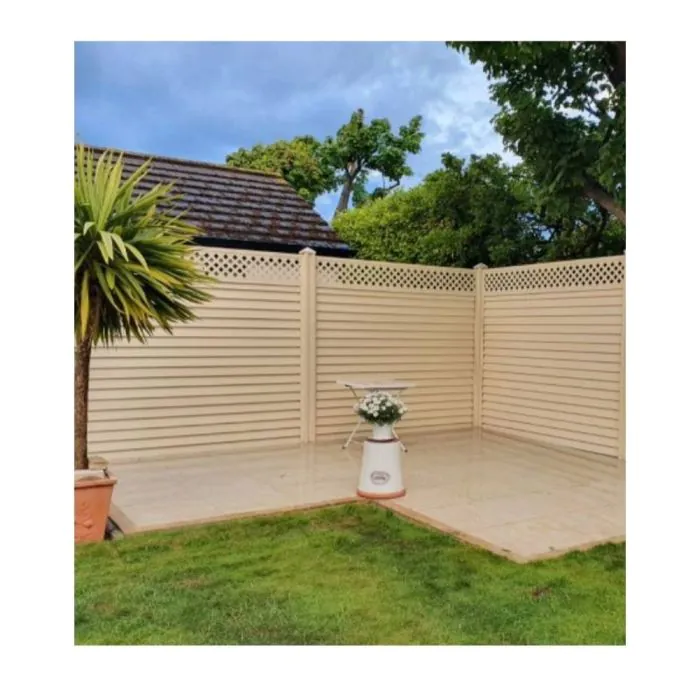
Composite fencing is the premium, low-maintenance alternative to timber. Made from a blend of recycled wood fibres and polymers, it resists rot, warping, and insect damage without any annual treatment or staining. It retains its appearance for decades - a significant advantage in Ireland's wet winters. McMahons also stocks the Smartfence system in several colours, with aluminium post systems, gravel boards, corner posts and end caps available for a complete installation.
Garden Fencing Cost Per Metre in Ireland
Cost varies significantly depending on fence type, height, post type, and whether you are including installation labour. The following are approximate supply-only material costs per linear metre for a standard 1.8m high fence:
• Lap panels (with timber posts): approximately €20 to €35 per metre
• Featheredge boards, arris rails, posts): approximately €25 to €45 per metre
• Hit-and-miss panels (with posts): approximately €30 to €50 per metre
• Post and rail (two-rail, timber): approximately €10 to €18 per metre
• Wire / stock fencing: approximately €5 to €15 per metre
• Composite and Smartfence systems: approximately €60 to €90 per metre
These are indicative material-only ranges. Add installation labour if hiring a contractor, and factor in post concrete, post caps, and fixings for a complete project cost.
Timber Treatment and Irish Weather Conditions
Ireland's wet, mild climate is harder on timber fencing than most homeowners expect. Ground-contact posts are particularly vulnerable. Untreated or poorly treated timber can rot at the base within a few years. Here is what to look for:
• Pressure treatment vs dip treatment: Pressure-treated timber forces preservative deep into the wood under vacuum and is significantly more durable than dip-treated alternatives. For posts and any ground-contact components, pressure-treated is the minimum specification. All McMahons fence boards and posts are pressure-treated.
• Treatment class: For ground-contact posts in Ireland, look for Use Class 4 treatment as a minimum - this is the standard for timber in contact with soil and fresh water.
• Post caps: Fitting caps on all post tops prevents water pooling on exposed end grain, which is the fastest route to rot. McMahons stocks post caps in multiple styles.
• Gravel boards: Fitting a gravel board at the base of panel fences keeps the main panel clear of ground moisture and can double the life of the panels.
• Coastal sites: For coastal or exposed hilltop locations, opt for closer post spacing (every 1.5m rather than 2m), heavier post sections, and hit-and-miss or featheredge designs that manage wind loading better than solid panels.
Post Spacing, Depth, and Fixing
Getting posts right is the most important part of any fence installation - a fence is only as good as what it is hanging from.
• Standard post spacing: Fence panels come in standard 1.8m widths, so posts are typically spaced at 1.8m centres. For exposed or high-wind sites, reduce to 1.5m for additional rigidity.
• Post depth: As a general rule, one third of the post length should be in the ground. For a 1.8m fence you will typically need a 2.4m post, with 600mm in the ground.
• Timber vs concrete posts: Pressure-treated timber posts are the standard domestic choice. Concrete posts offer greater longevity and are particularly suited to exposed sites or installations where the fence will not be replaced for decades. McMahons stocks both.
• Setting posts: Posts should be set in concrete for maximum stability, particularly for 1.8m or taller fences. Allow the concrete to cure for at least 24 hours before hanging panels or boards.
• Post repair spurs: If you have existing posts with rotted bases, post repair spurs allow you to salvage the above-ground section without full post replacement - a cost-effective option for partial fence repairs.

Planning Permission for Garden Fences in Ireland
In the Republic of Ireland, the rules on planning permission for garden fencing fall under the Planning and Development Regulations (Exempted Development provisions). The key thresholds are:
• Front garden / roadside boundary: Fencing, walls, or gates to the front of a house (facing a public road) must not exceed 1.2m in height without planning permission.
• Side and rear boundaries: Fencing or walls to the side and rear of a house can be erected up to 2m in height without planning permission, provided they are not in front of the front building line.
• Listed and protected structures: If your property is a protected structure or within an Architectural Conservation Area, additional restrictions may apply and you should check with your local authority before proceeding.
• Northern Ireland: Different rules apply. In Northern Ireland, permitted development rights typically allow fences up to 1m adjacent to a public road and 2m elsewhere, subject to conditions. Always check with your local council if in doubt.
This is a general guide only. Always verify current regulations with your local planning authority before proceeding with fencing that may be near permitted development thresholds.
How to Choose the Right Fence for Your Garden
The right fence depends on what you need it to do. Here is a practical decision guide:
• Privacy is the priority: Go for featheredge (closeboard) or solid lap panels at 1.8m. Featheredge is more durable; lap panels are faster to install.
• Exposed or coastal site: Choose hit-and-miss panels or featheredge, which handle wind loading better than solid panels. Use closer post spacing and consider concrete posts.
• Rural boundary or livestock: Post and rail combined with stock fencing or wire is the standard solution - practical, cost-effective, and long-lasting.
• Modern garden aesthetic: Horizontal featheredge panels, Smartfence, or composite fencing gives a clean, contemporary finish. Composite is higher cost but eliminates ongoing maintenance entirely.
• Budget is the main constraint: Lap panels are the most affordable route to a private boundary fence. Post and rail with wire is the cheapest option overall.
• Low maintenance preference: Smartfence or composite fencing with aluminium posts requires no treatment, staining, or painting. It costs more upfront but removes the ongoing cost and effort of timber maintenance.
Buy Garden Fencing at McMahons
McMahons Builders Providers stocks a full range of fencing solutions for homeowners and trade customers nationwide, across 11 branches and online with click and collect. Browse our complete fencing supplies range or shop by product type:
- Fence Panels - lap, hit-and-miss, horizontal featheredge and lattice-top panels in treated timber
- Fence Boards - featheredge, round-top, and square-edged boards for closeboard and hit-and-miss construction
- Posts, Rails and Caps - pressure-treated timber and concrete posts, arris rails, post caps, and repair spurs
- Smartfence or Composite - low-maintenance composite panels in multiple colours
- Wire Fencing - stock fencing, chicken wire, barbed wire, and straining wire
Our team can advise on quantities, post specifications, and product selection for your specific site. Find your nearest McMahons branch or order online for delivery or click and collect.
Frequently Asked Questions
What is the best garden fencing for Ireland?
The best garden fence for Irish conditions depends on your site. For privacy in a sheltered garden, solid lap panels or closeboard fencing at 1.8m are the most common choice. For exposed or coastal sites, hit-and-miss or closeboard fencing handles wind loading better than solid panels. For low maintenance, composite fencing requires no treatment or staining and performs well in Ireland's wet climate.
Do I need planning permission for a garden fence in Ireland?
In most cases, no. Under Irish planning law, fencing to the side and rear of a house can be erected up to 2m in height without planning permission. Fencing facing a public road is limited to 1.2m without permission. Rules differ for protected structures and in Northern Ireland, so check with your local authority if you are near these thresholds.
What is the cheapest garden fencing option in Ireland?
Wire fencing is the cheapest option at approximately €5 to €15 per metre for materials. For a solid garden boundary, lap panels are the most affordable choice at roughly €20 to €35 per metre for materials. Post and rail is the cheapest timber structure and is widely used for rural boundaries and larger garden perimeters.
How long should fence posts be for a 1.8m fence?
For a 1.8m fence, you will typically need 2.4m posts. The standard rule is that one third of the post length should be in the ground, giving approximately 600mm of depth. On softer ground, or for exposed sites, a deeper setting of 750mm to 900mm provides additional stability. Posts should be set in concrete for maximum longevity.
What is the difference between closeboard and lap panel fencing?
Lap panels are pre-built panels with overlapping horizontal slats, installed quickly between posts. Closeboard fencing is built board by board on site using vertical featheredge boards fixed to arris rails - it is stronger, more durable, and handles exposure better, but takes longer to install. Closeboard also allows individual boards to be replaced, whereas a damaged lap panel usually requires full panel replacement.
What timber treatment do I need for fence posts in Ireland?
For ground-contact fence posts in Ireland, look for pressure-treated timber to at least Use Class 4, which is specified for timber in contact with soil and fresh water. Pressure treatment forces preservative deep into the wood and significantly outperforms dip-treated alternatives in Ireland's wet climate. All fence posts stocked at McMahons are pressure-treated.
How far apart should fence posts be spaced?
Standard fence panels are 1.8m wide, so posts are typically spaced at 1.8m centres. For exposed, coastal, or windy sites, reducing spacing to 1.5m centres provides additional rigidity and reduces the risk of wind damage. Closer spacing is also recommended for taller fences or where the ground conditions are particularly soft.
What is hit-and-miss fencing and when should I use it?
Hit-and-miss fencing uses boards fixed alternately on either side of the rail, leaving small gaps that allow wind to pass through while still providing visual screening from most angles. It is the preferred choice for exposed or windy gardens because it reduces wind loading on the fence structure. It is also double-sided, meaning both sides look identical, which makes it well suited for shared boundary fences.
Does composite fencing work well in Ireland?
Yes. Composite fencing performs particularly well in Ireland because it is highly resistant to moisture, rot, and the freeze-thaw cycles that can crack and warp timber over time. It requires no annual treatment, staining, or painting, which makes it a cost-effective long-term option despite the higher upfront price. Smartfence is an alternative to composite systems and includes aluminium post systems and full kit components for a complete installation.
