Heating an Irish home is expensive. Between the damp Atlantic climate, ageing housing stock, and energy prices that remain stubbornly high, most households spend far more on staying warm than they need to. The roof is where a significant share of that money escapes: an uninsulated or under-insulated attic can allow 25-30% of a home's heat to leak out on average, making it the single biggest source of avoidable heat loss in most Irish properties.
The good news is that attic insulation is the most cost-effective energy upgrade available to Irish homeowners. It is relatively inexpensive to install, widely available as a DIY project, and may be eligible for SEAI grant support that has been significantly increased as part of the National Residential Retrofit Plan 2026. A well-insulated attic reduces heat loss, lowers energy bills, improves comfort throughout the home, and boosts your BER rating, all of which matter whether you plan to stay in your home or sell it.
This guide explains the main types of attic insulation available, how to choose between them, what thickness is required to meet current building regulations, and an SEAI grant funding overview. Whether you are planning a DIY weekend job or hiring a registered contractor, the information here will help you make the right decision for your home.
Cold attic or warm attic: which approach do you need?
Before choosing a product, it is worth understanding the two fundamentally different approaches to attic insulation, because they use different materials and suit different situations.
Cold attic insulation is the right choice for the vast majority of Irish homes. Insulation is laid at floor level between and over the ceiling joists, keeping heat in the rooms below while the attic space itself stays cold. This is the simpler, more affordable option and works equally well whether the attic is used for storage or left unused.
Warm attic insulation is needed when the attic is being converted into a habitable room, or when you are planning to do so in the future. Here, insulation is fitted between the roof rafters rather than the joists, bringing the heat envelope up to roof level and making the attic space comfortable to use as a living area.
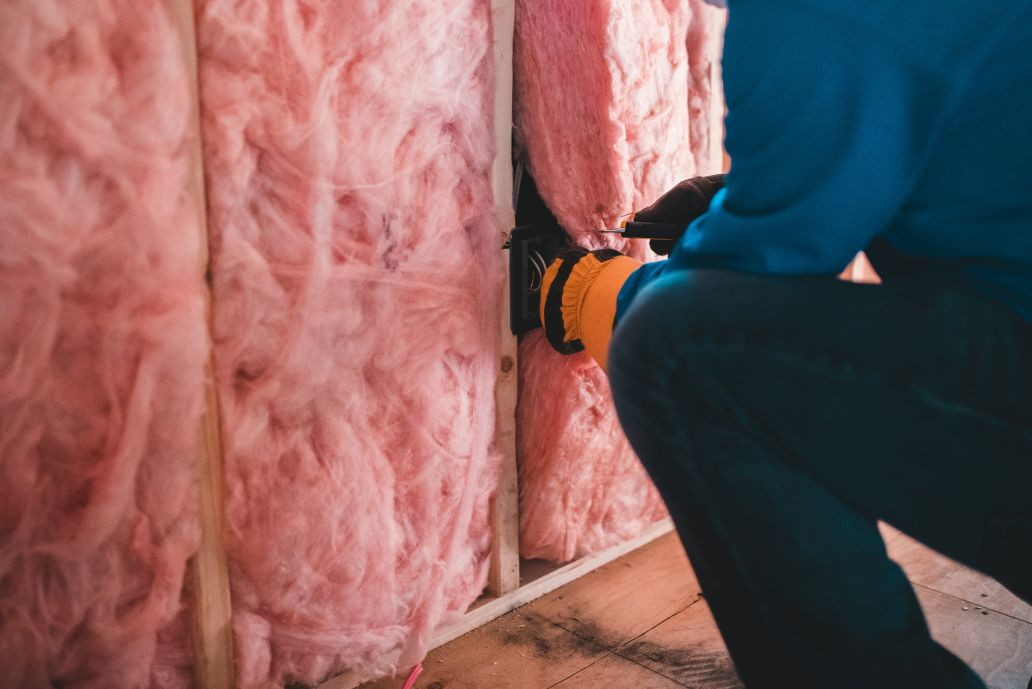
As a straightforward rule: if you are not converting, insulate the floor. If you are converting, insulate the rafters. McMahons stocks products for both: see our cold attic insulation range and warm roof insulation range.
Types of attic insulation: pros, cons and best uses
Mineral wool rolls (glass wool and stone wool)
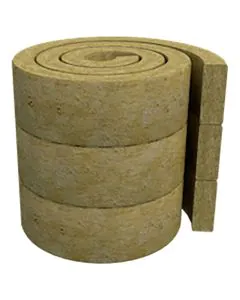
Mineral wool is the most widely used attic insulation in Ireland and the go-to choice for cold attic DIY projects. It comes in two main forms: glass wool (such as the Isover Spacesaver G3 Loft Roll) and stone wool (such as the Rockwool Insulation Roll). Both are laid between the joists and then topped with a second cross-layer to achieve the required depth.
Stone wool (Rockwool) does not compress or shrink with age, and offers superior fire resistance and acoustic performance. Glass wool is lighter and easier to handle for a DIY install.
Best for: Cold attic insulation, DIY installs, retrofitting older homes.
Rigid PIR boards (polyiso)
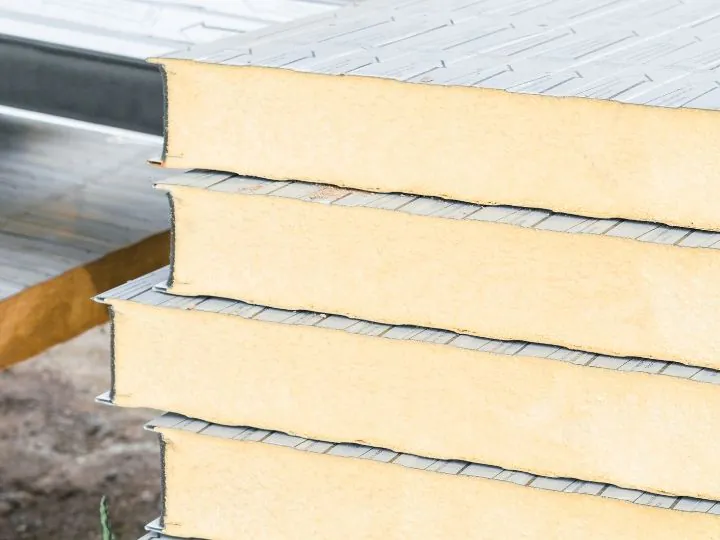
Rigid polyisocyanurate (PIR) boards offer significantly higher thermal performance per millimetre than mineral wool, making them the preferred choice for rafter-level insulation where space between the rafters is limited. McMahons stocks the 100mm Polyiso Pitched Roof Insulation (Rafter-Fit), designed to be cut and fitted between rafters and capable of achieving low U-values with a single layer.
Best for: Warm roof and rafter insulation, attic conversions, tight spaces.
Multifoil and reflective insulation
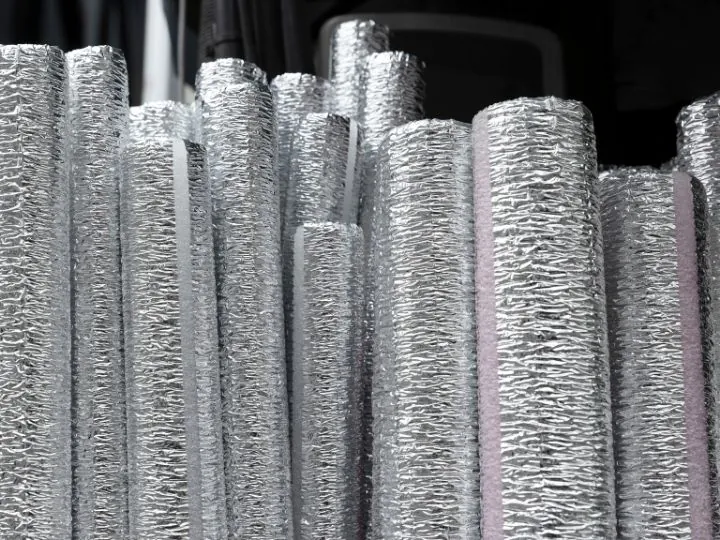
Multifoil products such as Superquilt and Komfort Wrap Reflective Insulation are thin, flexible multi-layered foil products used primarily in warm roof applications, often alongside PIR boards. They reflect radiant heat rather than absorbing it, and can help achieve compliance where space between rafters is very limited. A rafter support tray is typically used alongside multifoil to maintain the required ventilation gap.
Best for: Warm roof applications, supplementary insulation layers, tight rafter spaces.
Spray foam
Spray foam insulation is sometimes promoted as a quick fix for Irish attics, but it carries a serious risk that is not widely communicated. Homes with spray foam applied to roof timbers can be refused a mortgage or remortgage by lenders in Ireland. Many banks and building societies will not lend against a property where spray foam has been applied to roof rafters, as it can mask structural issues and make remediation costly. If you are considering selling your home or remortgaging in the future, spray foam represents a significant liability. We would strongly advise taking independent advice before proceeding with spray foam in any form.
Sheep's wool
Sheep's wool is a natural, breathable, and sustainable insulation option. It is particularly suited to older or protected buildings where breathability matters, as it absorbs and releases moisture without losing thermal performance. It tends to be more expensive than mineral wool but is an excellent choice for homeowners prioritising eco-friendly or traditional construction methods.
How thick should attic insulation be in Ireland?
This is one of the most commonly misunderstood aspects of attic insulation.
To meet Irish Building Regulations Part L, your attic insulation needs to achieve a U-value of 0.16 W/m²K or better (measuring the effectiveness of building materials for insulation). For mineral wool, this requires a minimum total depth of 270mm.
In practice, this means laying a first layer of 100mm between the ceiling joists, and then a second layer of 170 to 200mm laid across the joists at 90 degrees. The cross-layer is critical as it covers the joists themselves, which act as thermal bridges if left exposed.
Most older Irish homes have only 100mm of insulation, or in some cases none at all. If your total insulation depth falls below 270mm, you are losing significantly more heat than necessary.
Should you top up or replace existing insulation?
If you already have insulation in your attic, the answer in most cases is to top it up rather than remove it.
If the existing insulation is dry, free from mould, and not compressed, leave it in place and lay new insulation on top. Start by filling to joist level, then lay the cross-layer over the top. If the existing material is damp or showing signs of mould, it should be removed before installing new insulation or mould will continue to spread if sealed over.
One important point: never compress insulation. Mineral wool works by trapping air between its fibres, and compressing it reduces thermal performance significantly. If you are adding flooring for storage, use raised loft legs or battens to lift the boards above the insulation rather than laying them directly on top.

Don't forget the attic hatch
The attic hatch is one of the most overlooked sources of heat loss in Irish homes. An uninsulated hatch is essentially a cold panel sitting in your ceiling, allowing warm air to escape and cold air to drop into the room below.
The fix is simple and inexpensive: attach an insulation pad to the inside face of the hatch door and fit a draught-proof seal around the frame. A cut-down offcut of mineral wool or rigid board works well. This small job can make a noticeable difference to the temperature of the landing or hallway below. Suitable materials are available in our insulation accessories range and air tightness products.
SEAI attic insulation grants in 2026
SEAI grant amounts for attic insulation were increased as part of the National Residential Retrofit Plan announced in January 2026; the most significant expansion of home energy grant support in years. The updated figures are now live and apply to all new applications.
Grant values by property type
Property type | Standard grant |
Detached house | €2,000 |
Semi-detached or end of terrace | €1,500 |
Mid-terrace | €1,400 |
Apartment (top floor only) | €1,100 |
Higher grants for eligible applicants
- First-time buyers who purchased an existing home on or after 1 January 2025 can receive up to €2,500. The property must have been built and occupied on or before 31 December 2010. The higher amount is applied automatically once you declare eligibility during the online application.
- Homeowners on qualifying welfare payments can also access the €2,500 amount. Check eligibility via the SEAI welfare pre-check tool before applying.
Eligibility requirements
- Your home must have been built and occupied before 2011. The date your electricity meter was installed is used as the reference point.
- The grant is not available if the property has previously received SEAI funding for attic insulation at the same MPRN.
- For apartments, only top-floor units or those where heat escapes directly to the outside are eligible. Apartments with other apartments directly above do not qualify.
How to apply
You have two routes. You can manage the application yourself by selecting an SEAI registered contractor, applying online before any work begins, and submitting the paperwork once the job is complete and a post-works BER assessment has been carried out. Alternatively, a One Stop Shop can manage the entire process on your behalf, deducting the grant upfront from the cost you pay them.
Visit seai.ie/grants/home-energy-grants/individual-grants/attic-insulation for full details.
Worth knowing: the link to the new windows grant
From 2 March 2026, a new SEAI Windows and Doors grant became available offering up to €4,000 for a detached home. To qualify, your home must already have adequate attic and wall insulation rated as 'Good' or 'Very Good' in your BER Advisory Report. Sorting your attic insulation now therefore opens up the windows grant as a next step in the same upgrade cycle.
How much does attic insulation cost in Ireland?
Costs vary depending on attic size, insulation type, and whether you are doing the job yourself or using a contractor.
- DIY mineral wool (materials only): approximately €5 to €8 per m². A typical semi-detached attic of 40 to 50m² will cost €200 to €400 in materials.
- Professional installation: €1,500 to €2,500 for a typical semi-detached, including materials and labour.
- After SEAI grant: net cost typically falls to €700 to €1,200 for a professionally installed job.
- Annual energy savings: Irish homeowners typically save €300 to €500 per year on heating bills after upgrading attic insulation, meaning the investment usually pays for itself within two to four years.
Find attic insulation at McMahons
Attic insulation is one of those jobs that makes a tangible difference from day one — warmer rooms, lower bills, and a home that feels more comfortable to live in. Whether you are tackling it yourself over a weekend or bringing in a registered contractor to do the full job, having the right materials makes all the difference.
McMahons stocks a full range for both cold and warm roof applications, available across our 11 branches nationwide and online with delivery or click and collect. If you are unsure which product suits your situation, our in-store teams are always happy to point you in the right direction.
Full insulation range
Frequently asked questions
What is the best insulation for an attic in Ireland?
For a standard cold attic, mineral wool rolls (either stone wool or glass wool) are the best choice for most Irish homes. They are cost-effective, DIY-friendly, fire resistant, and widely available. For attic conversions or warm roof applications, rigid PIR boards are the recommended option.
How thick should attic insulation be in Ireland?
To meet Irish Building Regulations (Part L) and qualify for SEAI grants, attic insulation must achieve a U-value of 0.16 W/m²K, which requires a minimum total depth of 270mm of mineral wool. This is typically installed as 100mm between the joists and a 170mm cross-layer on top.
Can I get a grant for attic insulation in Ireland?
Yes. SEAI offers grants for attic insulation to homeowners whose properties were built and occupied before 2011. Grant values range from €1,100 for apartments to €2,000 for detached houses. First-time buyers and homeowners on qualifying welfare payments can access up to €2,500. You must apply and receive grant approval before starting any work.
Can I insulate my attic myself?
Yes, laying mineral wool rolls in a cold attic is an accessible DIY home improvement job. You will need protective gloves, a dust mask, goggles, and a kneeling board to spread your weight across the joists. Bear in mind that DIY installations do not qualify for an SEAI grant. Grant-funded work must be carried out by a registered contractor.
Is spray foam insulation safe for my attic?
Spray foam applied to roof timbers is not recommended for Irish homeowners who may wish to sell or remortgage their property. Many lenders in Ireland will refuse to lend against a property with spray foam insulation in the roof space. Always seek independent advice before using spray foam.
Should I remove old attic insulation before adding new?
Only if the existing insulation is damp, mouldy, or badly deteriorated. If it is in good condition, leave it in place and lay new insulation on top, starting with a layer between the joists and then a cross-layer over the top to reach the recommended 270mm total depth.
